

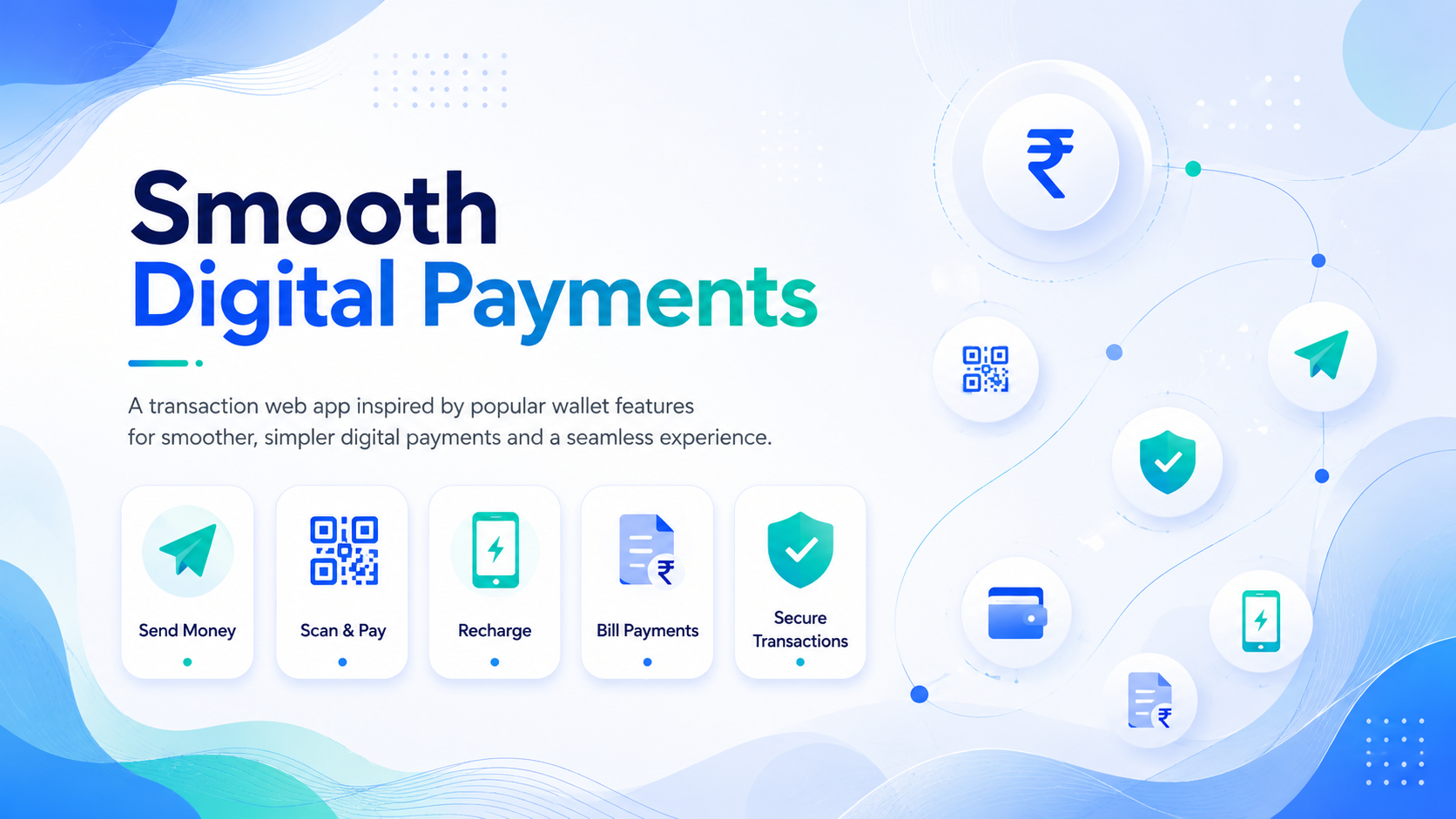
A transaction web app that simulates Paytm features for smoother, simpler digital payments and experience.
SpeedyTm
A transaction web application inspired by Paytm that enables users to send money, track transactions, and manage balances through a clean and intuitive interface.
About The Project
SpeedyTm was my first full-stack project and served as an introduction to building complete web applications from database design to deployment. The project simulates core digital payment functionalities and helped me understand how modern fintech applications handle authentication, transactions, and user management.
Key Features
- Secure money transfers between users
- User authentication and authorization
- Transaction history and tracking
- Real-time balance updates
- Responsive user interface
- Protected routes and session management
Technology Stack
Motivation
I wanted to understand how digital payment systems work behind the scenes. Applications like Paytm appear simple on the surface, but they involve authentication, database operations, secure transactions, and state management. Building SpeedyTm allowed me to explore these concepts while creating a complete production-ready application.
Goals
- Learn full-stack development from scratch
- Understand payment system architecture
- Connect frontend applications with backend APIs
- Build and deploy a real-world project
Development Journey
The project evolved through multiple stages:
- Designed MongoDB schemas for users and transactions.
- Built REST APIs for authentication and money transfers.
- Created React-based user interfaces.
- Connected frontend components to backend services.
- Implemented JWT-based authentication.
- Styled the application using Tailwind CSS.
- Deployed the application to Vercel.
Technical Challenges
API Integration
This was my first experience connecting a frontend application with backend services. I learned how to work with HTTP requests, handle responses, manage loading states, and display meaningful feedback to users.
State Management
Transaction workflows require data to flow through multiple components. Managing balances, user information, and transaction states helped me gain a deeper understanding of React state management patterns.
Authentication Flow
Implementing JWT authentication introduced concepts such as token generation, secure storage, route protection, and session validation.
Asynchronous Operations
Most actions in the application depended on API requests. Handling asynchronous workflows while maintaining a smooth user experience required careful loading and error state management.
Data Consistency
Money transfers must update multiple records correctly. Designing transaction logic taught me the importance of maintaining consistency across database operations.
Error Handling
Unexpected failures such as network interruptions, invalid inputs, or unsuccessful transfers required robust error handling strategies and clear user feedback mechanisms.
Key Learnings
-
Full-Stack Architecture : I gained a complete understanding of how databases, APIs, and frontend applications interact within a production environment.
-
REST API Design : I learned how to structure endpoints, use HTTP methods appropriately, validate requests, and organize backend services effectively.
-
Database Modeling : Designing MongoDB schemas taught me about relationships, data validation, and structuring collections for scalability.
-
React Development : The project strengthened my understanding of component architecture, hooks, state management, and application data flow.
-
Authentication & Security : I implemented JWT-based authentication, password hashing, protected routes, and learned fundamental web security practices.
-
Deployment & Production : Deploying the project to Vercel introduced concepts such as environment variables, production builds, and continuous deployment workflows.
Results
SpeedyTm became my first fully completed full-stack application and provided hands-on experience with the complete software development lifecycle. More importantly, it gave me the confidence to tackle larger and more complex projects in the future.
What I'd Improve Today
If I were rebuilding SpeedyTm today, I would:
- Add TypeScript for type safety
- Use a modern backend framework
- Implement real-time notifications
- Add comprehensive testing
- Introduce transaction rollback mechanisms
- Improve scalability and security practices